
Opposite Day for Your Mental Health
What Happens When You Try Something New?
Opposite Day is often associated with playfulness and humor, but it also offers a powerful opportunity to support your mental health. What if, just for a day (or even a moment), you tried doing the opposite of what your emotions are urging you to do?
From an evidence-based therapy perspective, this idea is more than a novelty. In Dialectical Behavior Therapy (DBT), there is a well-researched skill called Opposite Action, designed to help people change painful emotional patterns by intentionally choosing behaviors that move against unhelpful emotional urges.
Let’s explore how Opposite Day can become a meaningful mental health reset.
Why Our Emotions Shape Our Behavior
Emotions are designed to guide us toward safety and connection. However, when emotions are driven by anxiety, depression, shame, or fear, they can push us toward behaviors that actually deepen distress.
For example:
Depression often urges withdrawal, isolation, and inactivity
Anxiety pushes avoidance and over-preparation
Anger may drive impulsive reactions or shutting down
Research shows that avoidance and withdrawal can reinforce mood and anxiety disorders by reducing positive reinforcement and increasing rumination. In other words, when emotions run the show, the cycle often intensifies.
The Science Behind DBT’s Opposite Action
Opposite Action is grounded in behavioral science and emotion regulation research. The core idea is this:
“When an emotion doesn’t fit the facts, or isn’t helping, you can change the emotion by changing your behavior.”
Studies on behavioral activation and DBT skills training demonstrate that purposeful engagement in opposite behaviors can reduce emotional intensity and improve mood over time. Rather than waiting to feel better before acting, Opposite Action invites you to act first—allowing emotional shifts to follow.
What “Opposite” Might Look Like in Real Life
Opposite Action does not mean ignoring emotions or forcing positivity. It means responding skillfully.
Here are some examples:
If you feel depressed and want to stay in bed:
→ Get up, shower, step outside, or complete one small taskIf anxiety tells you to avoid something manageable:
→ Gently approach it in a paced, intentional wayIf shame urges you to hide:
→ Reach out to a trusted person or express yourselfIf anger pushes you to shut down or lash out:
→ Use calm communication or take a regulated pause
These choices may feel uncomfortable at first, but research consistently shows that emotions soften when behaviors change.
Opposite Day as a Mental Health Experiment
Opposite Day offers a low-pressure way to practice this skill. Instead of overhauling your life, try a single opposite behavior and observe what happens.
You might:
Spend 10 minutes journaling instead of scrolling
Take a short walk instead of staying sedentary
Try a creative activity instead of numbing out
Rest intentionally instead of pushing through burnout
Think of it as data collection, not self-judgment.
Reflection prompts to try:
What emotion showed up today?
What urge came with it?
What opposite action did I try?
How did my emotional intensity shift afterward?
When Opposite Action Works Best
Opposite Action is most effective when:
The emotion is strong but not based on immediate danger
The behavioral urge is keeping you stuck
The goal is long-term emotional health, not short-term relief
If an emotion does fit the facts (for example, fear in a truly unsafe situation), Opposite Action is not recommended. This is about discernment, not dismissal.
One Choice at a Time
Opposite Day reminds us that change doesn’t always begin with motivation. Sometimes it begins with a single, intentional choice to do something different with our time, our energy, and our attention.
At New Chapter Therapy, small behavioral shifts can open new emotional chapters. Trying something new, even briefly, can interrupt old patterns and create space for healing.
You don’t have to feel ready.
You just have to begin.
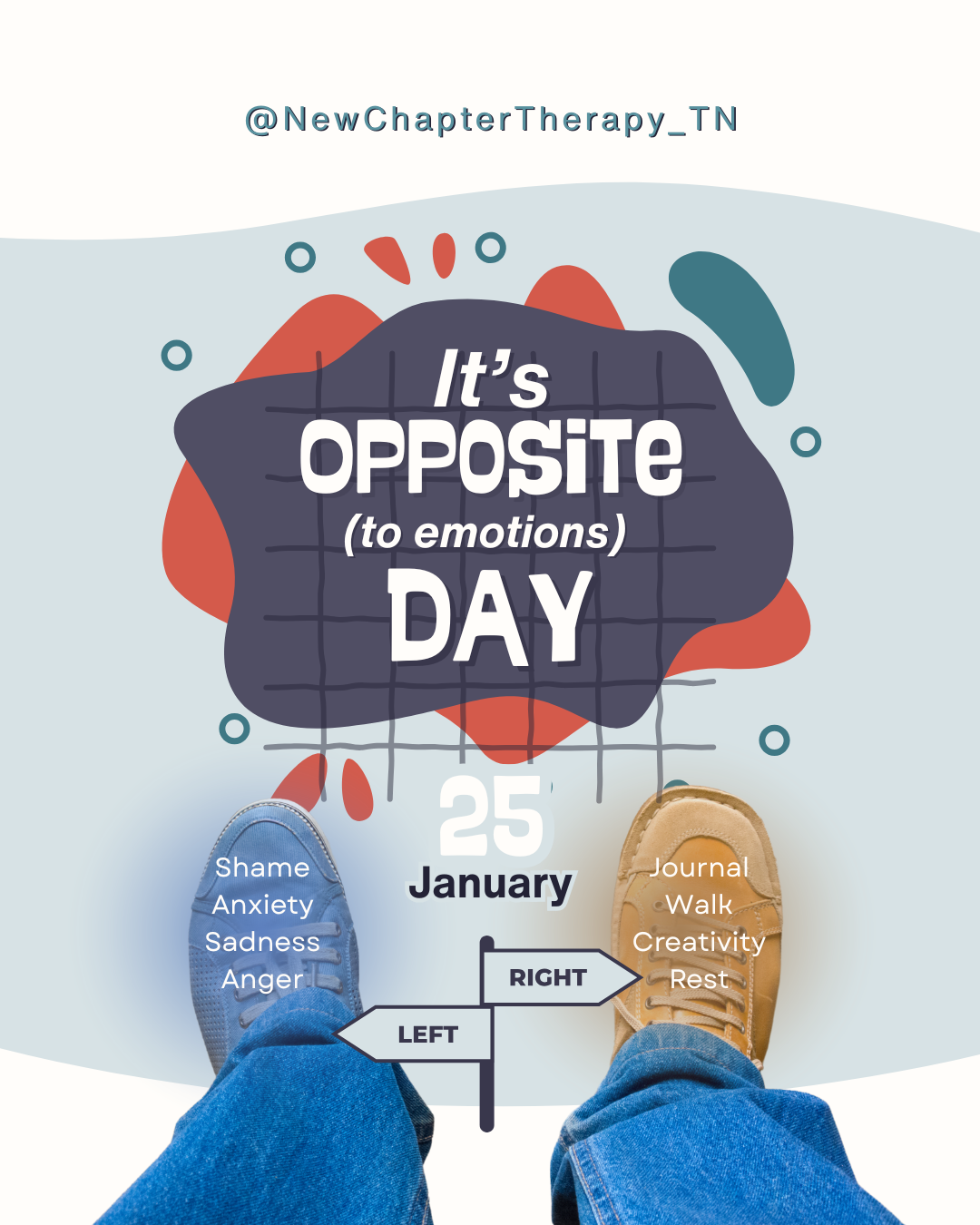
What NCT is Posting on Instagram
✨ Opposite Day for Your Mental Health ✨
Ever notice how stress makes you do the same thing every time?
Avoid. Shut down. Push through. Cancel plans.
Those responses make sense, but research shows they often keep anxiety and depression stuck.
In therapy, there’s a skill called Opposite Action: when emotions urge you to do something that doesn’t serve you long-term, you gently try a different response.
🧠 When behavior changes, emotions often follow.
That might look like:
Showing up instead of canceling
Reaching out instead of isolating
Resting instead of overworking
Speaking up instead of shutting down
You don’t have to feel ready.
You just have to try something slightly different.
Small changes = real momentum.
📖 Read the full blog to learn how trying something new can support your mental health in evidence-based ways.
💬 Reflection: What’s one small “opposite” you could try today?
#NewChapterTherapy #OppositeAction #MentalHealthSupport #TherapyWorks #DBTSkills #BehavioralActivation #AnxietySupport #DepressionSupport #NervousSystemRegulation #EmotionalWellbeing #HealingInProgress #TrySomethingNew