
Understanding the Impact of Compassion Fatigue and Burnout
At New Chapter Therapy, we work with a lot of people who are the “strong ones.” The helpers. The caregivers. The high-capacity professionals.
And sometimes, those very strengths become the reason they walk into our office feeling completely depleted.
Maybe you’ve noticed you’re more irritable than usual.
Maybe you feel emotionally flat.
Maybe you’re anxious, overwhelmed, or secretly wondering, “Why can’t I just handle this better?”
If that’s you, you’re not broken. You may be experiencing compassion fatigue or burnout.
Let’s talk about what that actually means, and what you can do about it.
What Is Compassion Fatigue?
Compassion fatigue is often described in research as a combination of burnout and secondary traumatic stress. It’s common among people in helping roles, therapists, nurses, teachers, pastors, parents, and first responders, but it can happen to anyone who consistently shows up for others in emotionally demanding ways.
Studies on caregiving professionals show that chronic exposure to others’ distress can impact mood, sleep, concentration, and even physical health. Compassion, while deeply meaningful, is not an unlimited resource. Without restoration, the nervous system begins to show signs of overload.
Common symptoms include:
Emotional numbness or apathy
Irritability or agitation
Difficulty concentrating
Feeling hopeless or directionless
Persistent sadness
Increased physical complaints (headaches, chronic pain, fatigue)
Wanting to escape or quit
Increased impulsive behaviors or substance use
What makes compassion fatigue tricky is that it often develops gradually. Many people don’t recognize it until a specific trigger, a conflict, a mistake, or a breaking point, forces them to pause.
What Is Burnout?
Burnout is more specifically linked to chronic workplace stress that hasn’t been successfully managed. The research of psychologist Christina Maslach, creator of the Maslach Burnout Inventory, identifies three core components of burnout:
1. Emotional Exhaustion
Feeling drained. Used up. “At the end of your rope.” You may find yourself dreading work or feeling like you have nothing left to give by the end of the day.
2. Depersonalization
This can look like cynicism, sarcasm, or emotional distancing. You may catch yourself thinking, “I just don’t care anymore.” It’s not cruelty; it’s your nervous system trying to protect you from ongoing overwhelm.
3. Reduced Personal Accomplishment
You may start to question your effectiveness and feel as though your work no longer matters, and even when you receive positive feedback, it doesn’t seem to register or feel believable.
Burnout is now recognized by the World Health Organization as an occupational phenomenon related to unmanaged workplace stress. In other words, this isn’t a personal failure. It’s a stress injury.
Why This Matters for Your Mental Health
Left unaddressed, compassion fatigue and burnout can increase vulnerability to depression, anxiety, trauma symptoms, and substance use. Chronic stress also impacts the body, sleep disturbances, immune suppression, and increased inflammation.
Your body will eventually ask for rest one way or another.
The goal is to listen before it has to scream.
Coping With Compassion Fatigue and Burnout
First, let’s say this clearly: You are not weak for feeling this way.
Burnout and compassion fatigue are predictable responses to prolonged stress. The solution isn’t shame, it’s intentional recalibration.
1. Rebuild Foundational Self-Care
At New Chapter Therapy, we talk about self-care as nervous system care, not bubble baths and checklists. Yes, we do take a scenic route into what self-care practices work for you.e
Evidence consistently shows that mood regulation improves when we protect the basics:
Consistent sleep routines
Regular movement (especially rhythmic movement like walking)
Balanced nutrition
Social connection
Meaningful, non-performance-based activities
If you’re post-VSG or working on physical health goals, this is especially important. Undereating, overworking, and undersleeping will intensify burnout symptoms. The body and brain are deeply connected.
Start small. Stability before optimization.
2. Set Clearer Boundaries
Research on occupational stress shows that lack of control and blurred boundaries significantly increase burnout risk.
Boundaries might sound like:
“I’m not available after 6 p.m.”
“I can’t take that on right now.”
“I need clarification before moving forward.”
If saying no feels terrifying, that’s important information. We often explore in therapy where over-functioning began and how it once served you.
Boundaries are not selfish; they are essential practices that protect your energy and support your long-term well-being.
3. Assess the Environment Honestly
Some environments are chronically unhealthy. No amount of journaling will fix systemic dysfunction.
Red flags include:
Poor leadership communication
Gossip or bullying
Unrealistic productivity demands
Punitive policies
Chronic understaffing
Being asked to operate outside your scope of competence
If you feel trapped, therapy can help you move from reactive survival to strategic planning. Sometimes healing includes staying and restructuring. Sometimes it includes leaving.
Both are valid chapters.
How Therapy Can Help
Compassion fatigue and burnout can be subtle and progressive. Therapy provides space to:
Identify early warning signs
Regulate your nervous system
Process secondary trauma
Reevaluate identity outside of productivity
Strengthen boundaries
Reconnect with meaning
Modalities like EMDR, parts work (IFS-informed therapy), CBT, and somatic approaches can all be helpful, depending on what’s driving your symptoms.
Most importantly, therapy offers something many helpers rarely receive:
A place where you are not the strong one.
A place where you don’t have to hold it together.
A Gentle Reminder
You can care deeply and still need rest.
You can love your work and still be exhausted.
You can be competent and still overwhelmed.
If you’re noticing the signs of compassion fatigue or burnout, it may not mean you’ve failed. It may mean your system is asking for a new chapter, one built on sustainability, not survival.
If you’re ready to begin that work, New Chapter Therapy is here to walk with you.
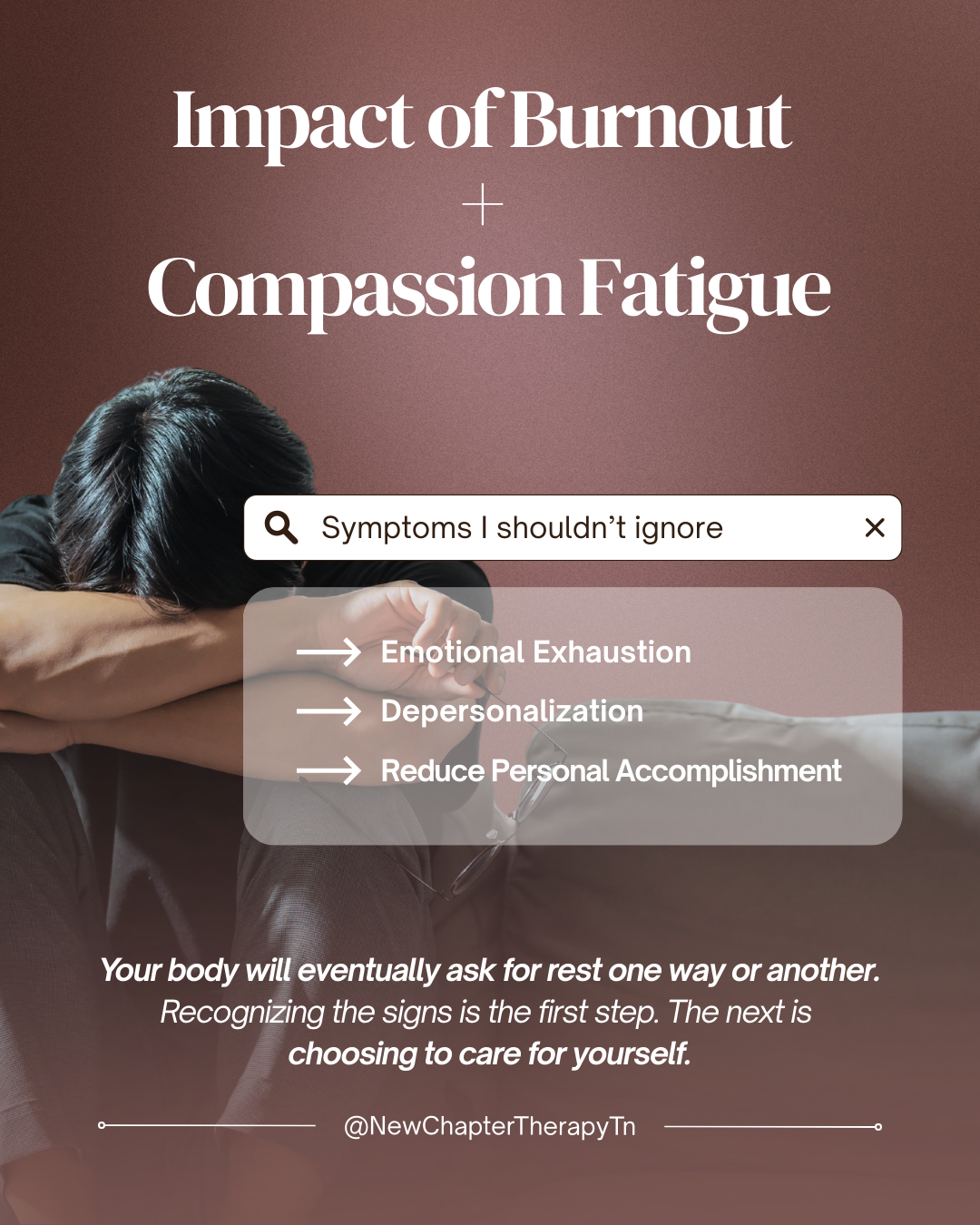
What NCT is posting on Instagram
Burnout and compassion fatigue rarely show up overnight.
More often, they build slowly after months or years of caring deeply, carrying heavy emotional loads, and pushing through exhaustion because the work matters. Over time, even the most compassionate and capable people can begin to feel drained, disconnected, or overwhelmed.
The truth is that compassion is powerful, but it is not limitless. When your nervous system stays in a constant state of giving, it eventually needs restoration. Recognizing the signs of burnout and compassion fatigue is an important step toward protecting your well-being and rebuilding resilience.
This month at New Chapter Therapy, we are exploring burnout, compassion fatigue, and the path back to sustainable care for yourself.
Read the full blog post to learn:
The difference between burnout and compassion fatigue
Signs your nervous system may be overwhelmed
Practical ways to begin restoring your energy
Because caring for others should never require losing yourself in the process.
#BurnoutRecovery #CompassionFatigue #MentalHealthAwareness #TherapySupport #NashvilleTherapy #NewChapterTherapy #EmotionalWellbeing