
8 Gentle Ways to Take Care of Yourself This Winter
As winter settles in, shorter days and colder weather can take a noticeable toll on mental and emotional health. Many people experience increased fatigue, sadness, or stress during this season, and it’s common to feel less motivated or connected. Research suggests that reduced daylight and changes in routine can impact mood regulation and overall well-being.
At New Chapter Therapy, I understand that caring for your mental health during the winter months requires both awareness and intention. Here are eight gentle ways to support yourself through this season of stillness and reflection.
1. Get Outside, Even Briefly
Cold weather and dark mornings can make it harder to spend time outdoors, but even a few minutes of fresh air can help improve mood and energy. Exposure to natural light supports your body’s internal clock and can ease symptoms of seasonal low mood.
Try taking a short walk, standing on your porch with your morning coffee, or sitting near a sunny window. You don’t have to do it perfectly; what matters is finding simple, steady ways to step outside and reconnect with the world around you.
2. Nourish Your Body With Balance
Winter often brings comfort foods and holiday treats, and there’s room for both nourishment and enjoyment. Instead of focusing on restriction, aim for balance.
Choose foods that help sustain your energy: fruits, vegetables, proteins, and whole grains. Stay hydrated and limit excessive caffeine or alcohol, which can affect sleep and mood. A balanced approach to eating can help your body feel supported, especially during darker, colder months.
3. Move Your Body With Intention
Movement is one of the most effective ways to boost mood and reduce anxiety. It doesn’t have to be high intensity to make a difference. Gentle stretching, yoga, or even dancing in your living room can help release tension and improve emotional balance.
If it’s hard to stay motivated, focus on movement that feels enjoyable rather than obligatory. A short daily routine, like a 10-minute walk or simple at-home exercises, can be enough to lift your spirits and reconnect you to your body.
4. Check Your Vitamin D Levels
Sunlight is one of our main sources of Vitamin D, which supports both immune health and mood regulation. During the winter, it’s common for Vitamin D levels to drop.
If you notice persistent low mood, fatigue, or lack of motivation, it may be worth talking with your healthcare provider about testing your Vitamin D levels. They can help determine whether a supplement might be beneficial for you.
5. Stay Connected
Social connection is one of the strongest protective factors for mental health. During the winter, it’s easy to retreat, especially when energy feels low, but isolation can intensify feelings of sadness or anxiety.
Reach out to loved ones in ways that feel manageable. A phone call, shared meal, or short check-in can help maintain connection. Remember, connection doesn’t have to be constant; it just needs to be intentional.
6. Practice Gratitude and Mindfulness
It’s easy to lose sight of gratitude when the days feel short and heavy, but intentionally noticing small moments of warmth and comfort can shift your mindset.
Try writing down three things you’re grateful for each day, or simply take a moment to pause and breathe when you notice something beautiful like a warm blanket, a kind word, or a quiet sunrise. Gratitude doesn’t erase hardship; it helps balance perspective and fosters resilience.
7. Create Meaningful Winter Traditions
The colder months are a natural invitation to slow down and refocus on what matters most. If this season feels difficult, it may help to create small traditions that bring comfort and connection.
That could mean making soup with a loved one, starting a winter reading ritual, or hosting a simple, cozy night in. Traditions don’t have to be elaborate; they just need to feel meaningful to you.
8. Reach Out for Support When You Need It
If you notice your mood dipping significantly during the winter, you’re not alone. Many people experience Seasonal Affective Disorder (SAD) or milder forms of the “winter blues.” Common symptoms include fatigue, loss of interest in activities, changes in sleep or appetite, and feelings of sadness or irritability.
Therapy can provide a space to process these emotions, develop coping strategies, and reconnect with balance and purpose. At New Chapter Therapy, we take a compassionate, whole-person approach supporting your mind, body, and spirit through all seasons of life.
Final Thoughts
Winter can be a time of rest, reflection, and renewal. You don’t have to push through it on your own or pretend everything feels bright. Small, intentional acts of self-care, getting outside, connecting with others, or simply slowing down can bring warmth back into even the coldest days.
At New Chapter Therapy, I believe that healing begins with gentleness. Whether you’re feeling the weight of the season or simply looking to nurture your wellbeing, we’re here to walk alongside you through every chapter.
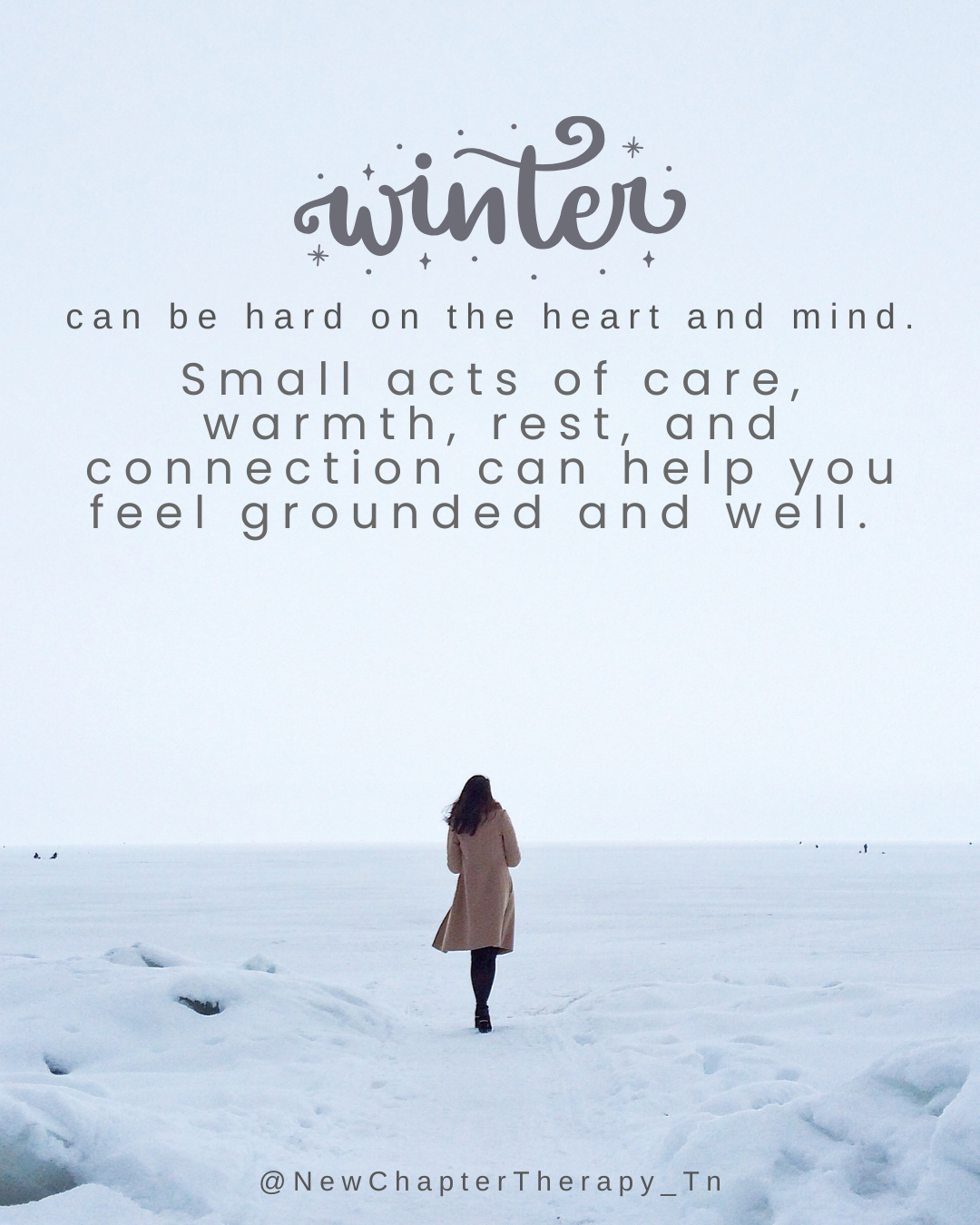
What NCT is Posting on Instagram
Winter can be hard on the heart and mind. ❄️
As the days grow darker, give yourself permission to slow down and care for your well-being with intention. 🌿
Small acts of self-care, getting outside, connecting with others, nourishing your body, or simply resting can make a big difference. You deserve warmth, balance, and peace this season. 💛
Read more on our blog, Turning the Page, at New Chapter Therapy. (link in bio)
#WinterWellness #SelfCareSeason #MentalHealthMatters #WholeheartedWellness #TherapyTips #GentleGrowth #SeasonalWellbeing #NewChapterTherapy #MindBodySpirit #EmotionalHealth #HealingJourney #MindfulLiving